

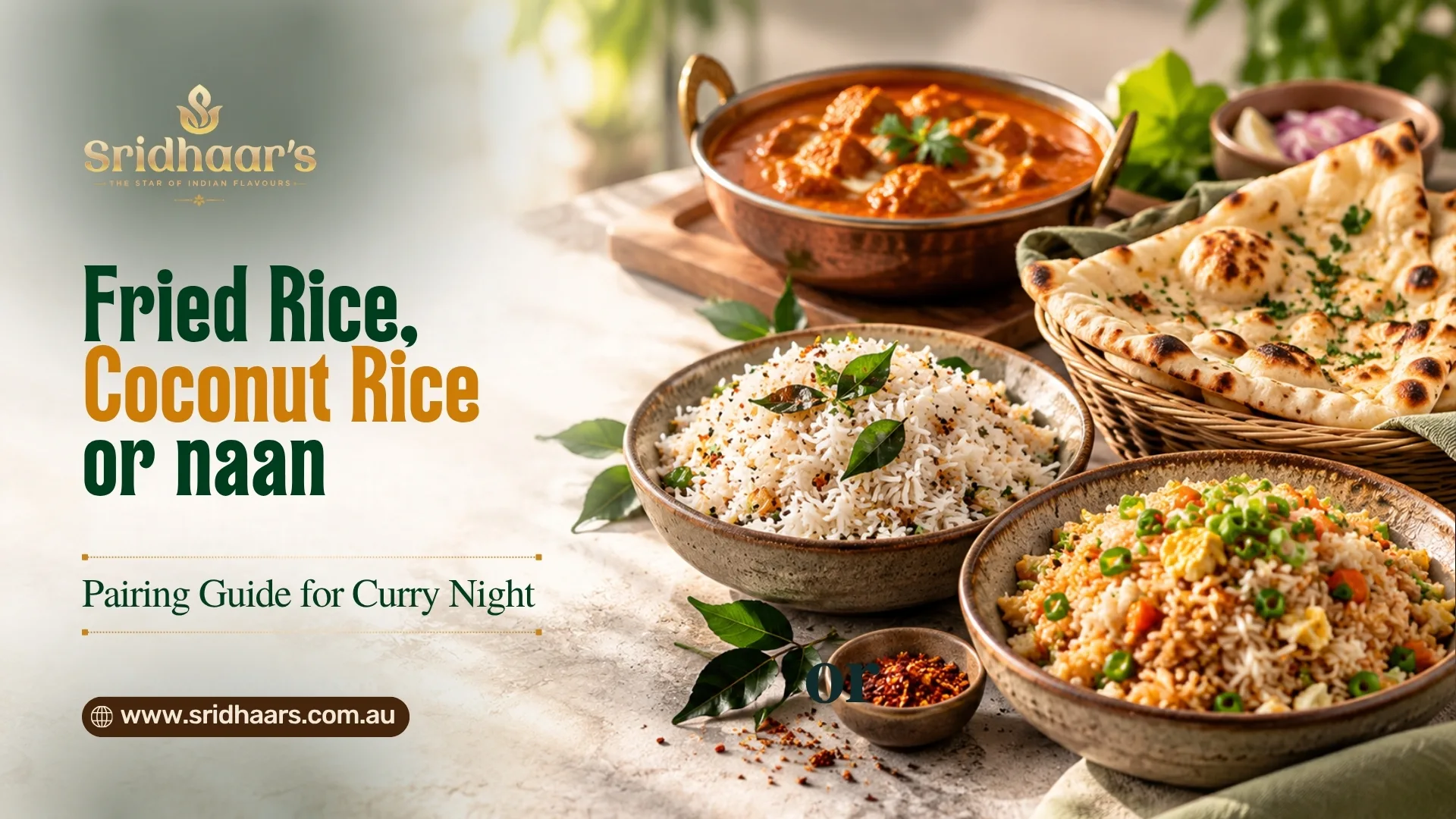
Naan bread suits thick, creamy curries, coconut rice suits spicy or tangy dishes, and a fried rice dish works best alongside lighter, Indo-Chinese style plates. Once you know this, ordering at an Indian restaurant gets a lot easier.
Choosing food at an Indian restaurant can feel a bit overwhelming, especially if you are new to the menu. Curries, bread, and rice dishes all sit side by side, and picking the wrong combination can bury a curry’s spices or make the whole meal feel heavy.
This guide breaks the choice down into simple rules, so your next curry night pairing works perfectly.
Even seasoned curry lovers sometimes default to the same side out of habit. Learning which side actually complements which curry opens up a whole new way of enjoying the menu, rather than sticking to the same order every visit.
Quick Answer
- Naan bread: best with thick, creamy, or buttery curries.
- Coconut rice: best with spicy, tangy, or coconut-based curries.
- Fried rice dish: best with Indo-Chinese style mains, not traditional curry.
The Art of Pairing
Good pairing comes down to matching your side to the sauce, not just picking a favourite. Thick, creamy gravies need something that can scoop and hold the sauce like naan, while thin or fiery sauces need something that soaks in or cools the heat like rice.
Sauce consistency is the first thing worth checking on the menu. A rich, cream-based gravy clings to bread far better than it clings to loose grains of rice, which is why bread-based sides tend to suit the heavier dishes.
Fat also plays a real role here. Capsaicin, the compound that makes chilli taste hot, dissolves in fat rather than water. This is why buttery naan bread or coconut-based sauces can soften a spicy dish, while palin water barely helps at all.
Flavour balance matters just as much as texture. Rich, spicy curries usually pair well with something cooling or neutral, while milder curries can handle a more aromatic side without getting lost.
Naan Bread: The Ultimate Scoop for Rich and Creamy Curries
Naan bread is the right choice whenever a curry’s gravy is thick enough to scoop up. This soft, leavened bread was traditionally baked in a clay tandoor oven, using yeast or yoghurt to give it that light, airy texture and slightly charrred edges.
Naan bread usually comes in several styles, from plain and butter naan to garlic, cheese, and sometimes a sweet, nut-stuffed variety. Each version works well, but a classic butter naan or garlic naan tends to suit rich curries best, since it does not compete with the sauce’s flavour.
The soft, slightly chewy texture of naan bread also makes it easy to tear and scoop with your hands, which adds to the experience of a rich, saucy meal. This hands-on style of eating is part of why naan bread remains such a popular choice across Indian restaurants everywhere.
Naan bread pairs beautifully with dishes like butter chicken, paneer butter masala, dal makhani, and a creamy lamb korma. These curries share a thick, buttery, or a cream-based gravy that naan is built to scoop up.
Coconut Rice : The Aromatic Companion for Coastal and Spicy Curries
Coconut rice works best alongside coastal curries or dishes with real heat behind them. This South Indian classic combines rice with grated coconut and warm spices, often finished with mustard seeds and curry leaves for a light, nutty aroma.
This dish carries a long history in South Indian kitchens, where coconut appears in everything from curries to chutneys thanks to its wide availability along the coast. That some coconut base is what makes the rice such a natural partner for coastal seafood curries.
Because coconut rice carries a mild natural sweetness, it does an excellent job of taming fiery dishes. A fiery lamb or chicken vindaloo brings serious heat, and coconut rice helps cool that intensity down without dulling the spice altogether.
Coconut rice also complements coconut-based curries beautifully, including a Malabar-style fish curry, a coconut prawn curry, and a Chettinad-style chicken curry. The shared coconut base ties the whole plate together rather than competing with it.
Indo-Chinese Fried Rice: The Savoury Star for Semi-Dry and Fusion Dishes
A fried rice dish belongs on the table when you are ordering Indo-Chinese style food rather than a traditional curry. As CNN Travel and many other sources point out, this dish actually comes from Kolkata’s Hakka Chinese Community, not form classic Indian cooking, which is why its pairs so naturally with other Indo-Chinese plates.
Over time, this fusion style grew into its own category on Indian restaurant menus, sitting comfortably alongside traditional curries without actually being one. A fried rice dish reflects that fusion background in every bite, with its wok-charred flavour and garlic-forward seasoning.
Fried rice dishes usually come in veg, egg, and chicken varieties, all wok-tossed with vegetables and savoury Asian sauces. This smoky, garlic-forward flavour profile matches perfectly with dishes like chilli chicken, vegetable manchurian, and chicken 65.
A fried rice dish also works well as a shared main alongside starters like chilli garlic paneer or chilli garlic baby corn, especially for a fusion-style curry night rather than a classic one.
What to Order When You Cannot Decide
- Can’t agree on one side? Order a small serve of naan bread alongside coconut rice, it covers both rich and spicy curries without anyone missing out.
- Ordering for a larger group? Match each curry to its own side instead of picking one carb for the whole table. A shared bread basket suits North Indian dishes, while coconut rice works well for anything spicier.
- Mixing vegetarian and non-vegetarian orders? No problem. Naan bread and coconut rice both pair naturally with vegetarian curries like a vegetable korma or a creamy paneer dish, so no one needs a separate side.
Cheat Sheet: How to Build Your Perfect Curry Night Plate
| Side | Best Paired With |
| Naan bread | Butter chicken, paneer butter masala, dal makhani |
| Coconut rice | Malabar-style fish curry, Chettinad chicken curry, vindaloo |
| Fried rice dish | Chilli chicken, vegetable manchurian, chicken 65 |
Try building your night around one of these three combinations:
1.The North Indian Feast: Butter naan, butter chicken, and dal makhani.
2.The Coastal Escape: Coconut rice, Malabar-style fish curry, and Chettinad chicken curry.
3.The Indo-Chinese Night: Vegetable manchurian, chilli garlic paneer, and chicken fried rice.
Each theme sticks to one style of cooking rather than mixing sides and mains from different traditions. Keeping a meal consistent this way tends to bring out the best in every dish on the table, rather than pulling the flavours in different directions.
Elevate Your Next Curry Night
The right pairing turns a good curry into a great meal, and now you have a simple system to work from. Naan bread, coconut rice, and a fried rice dish each shine with a different style of curry, so there is no single wrong answer, only the pairing that suits what you are craving.
Next time the menu feels overwhelming, come back to these simple rules. A quick check of the sauce, the heat level, and the style of the dish will point you toward the right side almost every time.
Ready to put this guide into practice?
Book a table at Sridhaar’s Indian Restaurant and try one of these pairings for yourself.
Are you Team Naan or Team Rice? Let’s find your favourite pairing.